Cannabis seeds can last way longer than most people think, but only if you store them as they matter. Seeds aren’t “dead” just because they’re dry. They’re living, dormant plant embryos with a limited energy reserve. Over time, that reserve runs down, and the seed becomes less likely to germinate.
Here’s the big idea. Seed age matters less than seed storage. A one-year-old seed kept warm and humid can fail fast. A five-year-old seed kept cool, dark, and dry can still pop.
Quick answer: seed lifespan by storage setup
If you want a simple benchmark, use this table as your baseline. It’s realistic for most home environments.
Storage conditions and typical lifespan
- Room temperature (drawer, cupboard): 6 months to 1 year
- Refrigerated (sealed + dark): 2 to 5 years
- Frozen (stable, low-moisture, controlled): 10+ years (more “pro-level” than casual home storage)
These ranges aren’t promises. They’re what tends to happen when the “big three” (humidity, temperature, light) are controlled or ignored.
What it means when seeds “go bad”
Most people imagine seeds “expire” like milk. That’s not how seeds work.
Seeds usually fail for one of these reasons:
- The embryo inside dried out too much or got damaged.
- The seed absorbed moisture and started breaking dormancy too early.
- Mould or microbes attacked the shell and interior.
- Heat sped up the internal breakdown until the seed ran out of stored energy.
So when you’re judging seed lifespan, you’re really judging viability (can it germinate) and vigour (how strongly it germinates).
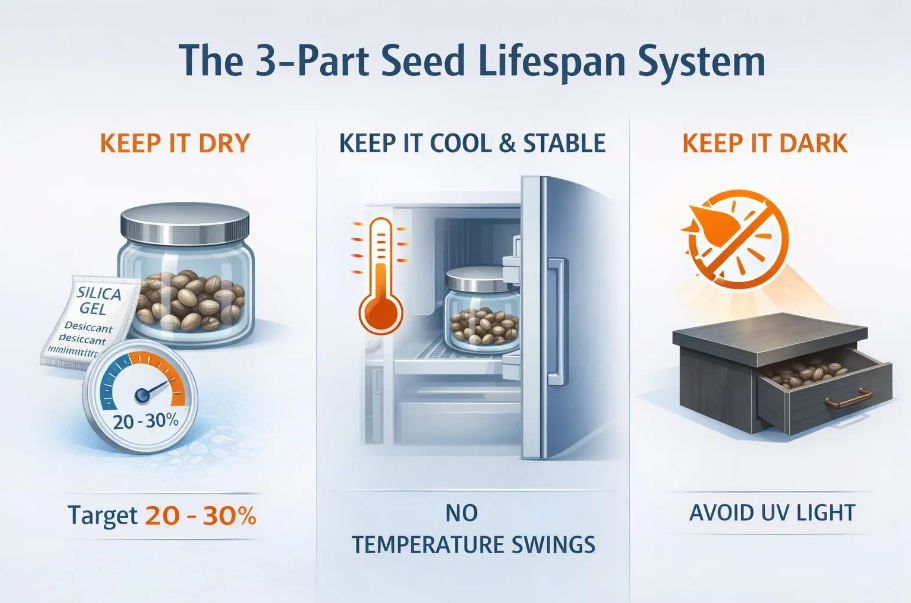
The 3-Part Seed Lifespan System
If you want your seeds to last, this is the system to follow every single time.
Part 1: Keep it dry (but not bone-dry)
Humidity is the biggest seed killer. High humidity can cause rot or mould. Extreme dryness for too long can weaken the embryo. A practical target inside your storage container is about 20% to 30% humidity.
Part 2: Keep it cool and stable
Heat speeds up seed ageing. Temperature swings are even worse because they push moisture in and out of the seed coat. A stable cool spot beats a “sometimes cool” spot.
Part 3: Keep it dark
Light, especially UV, can damage the outer coating and the genetic material inside. Darkness is a simple way to protect the seed over the long haul.
The Big Three seed killers (and how they attack)
1) Humidity
This is the fastest way to lose a stash.
Too humid (often above ~60%)
- Higher risk of mould and rot
- Seeds can “wake up” early and fail in storage
Too dry (often below ~20%)
- The embryo can dry out so far it struggles to restart growth
Best move: control humidity inside the container with airtight storage and a desiccant.
2) Temperature
Warm storage speeds up internal breakdown. Even in dormancy, seeds still have slow chemical activity. Heat makes those reactions run faster, which burns through the seed’s stored energy.
What really hurts: frequent temperature changes, like fridge doors, windowsills, or near appliances.
3) Light
Seeds are designed to sit in darkness (soil, plant matter, shade). Light exposure can weaken the shell and contribute to internal damage over time.
Best move: store seeds in a dark container, then put that container in a dark place.
Step-by-step: how to store seeds for max lifespan
This is a simple setup that works for most growers and seed shoppers who want a reliable system.
Step 1: Start with the best “inner layer”
If the seeds came in original packaging, keep them in it. It’s often designed to reduce light exposure and handling damage.
Step 2: Use a truly airtight container
Pick one:
- Glass Mason jar (simple, reliable)
- Vacuum-sealed bag (great if done properly)
Avoid thin plastic baggies for long-term storage. They can allow slow moisture exchange over time.
Step 3: Add a desiccant packet
Drop a silica gel packet inside the jar to grab stray moisture. This is one of the easiest upgrades you can make.
Step 4: Store in a stable cool location
A refrigerator can be a strong option if the seeds are sealed.
Pro tip: don’t store in the fridge door. The door warms up and cools down constantly. Pick a deeper shelf or a crisper area where the temperature stays steadier.
Step 5: Don’t keep opening the container
Every open-and-close adds warm air and humidity. If you have multiple batches, split them into smaller jars so you only open what you need.
Storage options list: choose your “seed shelf life” level
Think of storage like tiers. The better the tier, the longer your seeds usually last.
Option A: Basic (short-term)
- Drawer or cupboard
- Original pack or simple container
Best for: weeks to months
Typical lifespan: about 6 months to 1 year
Option B: Better (long-term home setup)
- Airtight glass jar
- Silica gel packet
- Dark, stable cool spot (often a fridge)
Best for: long-term storage without fancy gear
Typical lifespan: about 2 to 5 years
Option C: Advanced (very long-term)
- Seeds dried to a safe, stable moisture level
- Professionally stable freezer conditions
Best for: long-term preservation in controlled environments
Typical lifespan: 10+ years
How to tell if a seed is still viable
No test is perfect without germinating, but you can screen seeds before you waste time.
Visual checks
Good signs
- Dark brown, grey, or black colour
- Mottling or “tiger stripes”
- Slight sheen, often waxy-looking
Warning signs
- Pale green or white (often immature)
- Visible mould
- Cracks, pinholes, collapsed shell
Feel check
A viable seed usually feels hard and solid. If it feels soft or hollow, it may be damaged.
Gentle “crush” check
Very gently squeeze between thumb and forefinger.
- If it cracks easily, it’s likely dead or overly dried out.
- If it resists light pressure, it’s more likely viable.
Go easy here. A seed can be ruined by too much pressure.
Conclusion
Cannabis seeds don’t have a fixed expiry date. Their lifespan depends on how well you protect them from the three biggest threats: humidity, temperature swings, and light. Room storage often gives you months to about a year of strong odds. A sealed, dark, moisture-controlled setup in a stable cool spot can push that to 2 to 5 years, sometimes longer. And while germination rates drop over time, the genetics don’t “change.” The seed either has enough life left to wake up, or it doesn’t.
FAQs
How long do cannabis seeds last at room temperature?
Often, 6 months to 1 year before germination rates drop noticeably, depending on humidity and heat swings.
Can cannabis seeds last 5 years?
Yes, many can, especially with airtight storage, moisture control, darkness, and stable cool temperatures. Refrigerated storage tends to improve the odds.
What humidity is best for storing seeds?
A practical target inside the container is around 20% to 30% humidity. Too much humidity raises mould risk. Being too dry for too long can weaken the embryo.
Is the fridge a good place to store seeds?
It can be, if the seeds are sealed airtight and kept dark with a desiccant. Avoid the fridge door because of temperature swings.
What do healthy seeds look like?
Most healthy, mature seeds are darker and firmer, often with mottling or stripes. Pale seeds are often immature and less likely to germinate.
Why would a newer seed fail but an older one sprout?
Storage history. A newer seed exposed to heat, humidity, or light can degrade quickly. An older seed stored properly can stay viable much longer.